24 Aug 2026
Balancing High-Roller Incentives with Self-Exclusion Tools in Integrated Casino Loyalty Frameworks

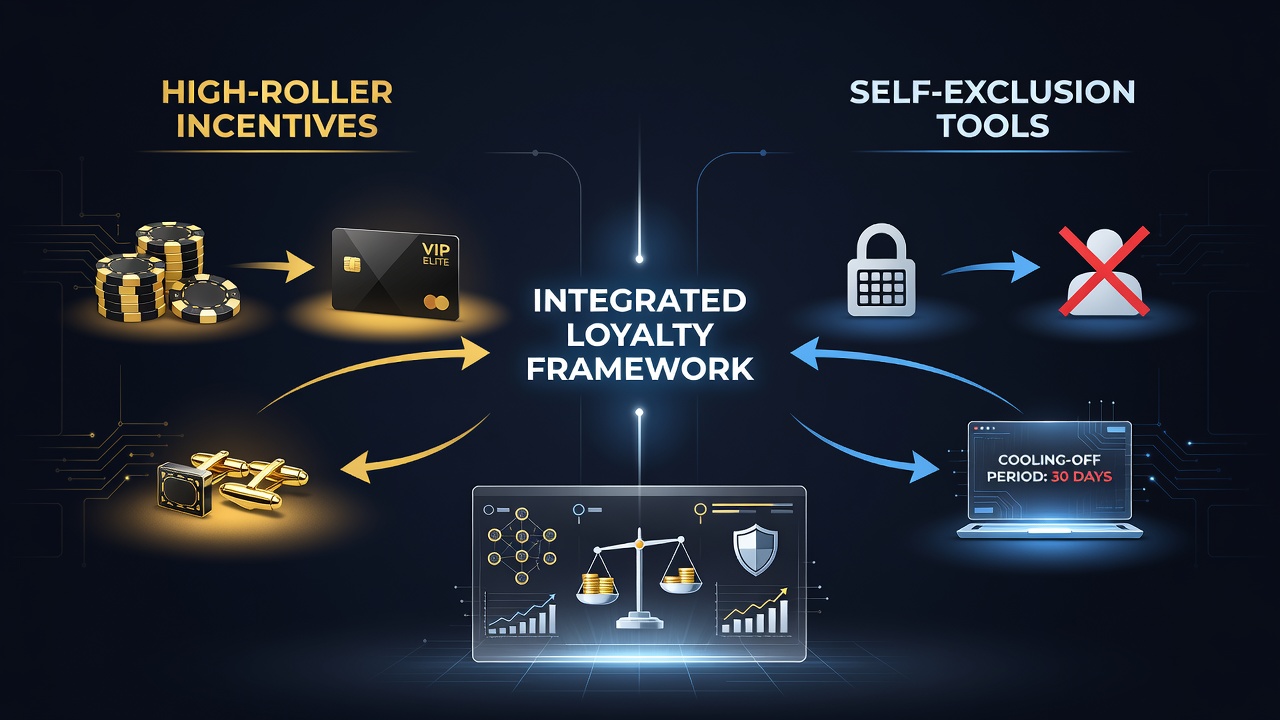
Casino loyalty frameworks now link high-roller incentive structures directly to self-exclusion databases so that player tracking systems can flag accounts and pause rewards the moment exclusion requests activate. Operators compile detailed profiles from carded play, then route those profiles through centralized responsible gaming modules that automatically suspend marketing offers and comps when a self-exclusion period begins. Data from multiple jurisdictions shows that integrated platforms reduce the chance of accidental incentive delivery by routing every reward trigger through real-time exclusion checks before any credit posts to an account.
High-Roller Incentive Structures
High-roller programs award tiered benefits that scale with theoretical loss and actual handle, including dedicated hosts, room upgrades, and personalized bonus offers delivered through the same loyalty engine that records every wager. These systems calculate expected value from historical play patterns and issue invitations automatically once thresholds are crossed, yet the same calculation engines now cross-reference exclusion lists before any offer generates. Observers note that seamless integration prevents the delivery of free-play credits or event tickets to individuals who have requested time away from gaming floors.
Self-Exclusion Integration Mechanics
Self-exclusion tools embedded in loyalty platforms allow players to set exclusion periods that range from six months to lifetime, and the request immediately updates a shared database accessible to all participating properties. When an excluded player attempts to redeem a loyalty reward or access a VIP lounge, the system blocks the transaction and redirects the account to support resources instead. Research conducted across North American and Asian markets indicates that real-time synchronization between exclusion lists and reward engines cuts unauthorized redemptions by measurable percentages each quarter.
Regulatory Context in August 2026
Regulatory updates scheduled for August 2026 require operators in several U.S. states and Canadian provinces to demonstrate that loyalty systems perform exclusion checks before any high-roller benefit activates. The Nevada Gaming Control Board has issued guidance requiring quarterly audits of these integrated checks, while similar rules in other regions mandate documentation of every blocked reward attempt. Nevada Gaming Control Board reports detail how these audits verify that exclusion flags override promotional logic across mobile, kiosk, and table-game tracking interfaces.
Operators respond by building API connections that query exclusion status at the moment a reward calculation runs, rather than after the fact. This approach keeps incentive delivery compliant while preserving the speed that high-roller programs demand. Figures from industry associations show that properties adopting these protocols report fewer compliance incidents tied to loyalty offers reaching excluded accounts.
Operational Challenges and Solutions
Multi-property operators face the added task of synchronizing exclusion data across regional brands so that a request filed at one location instantly affects accounts at every sister property. Middleware layers now handle this synchronization by pushing updates to every loyalty database within seconds of a new exclusion entry. Those who manage these frameworks report that the technical lift remains manageable when the same player-tracking vendor supplies both the incentive engine and the exclusion module.
High-volume players sometimes maintain multiple loyalty profiles across different operators, which creates gaps if exclusion requests do not propagate through shared industry lists. Jurisdictions that require mandatory participation in statewide or national exclusion registries close many of those gaps by mandating daily data exchanges between all licensed casinos. Academic reviews of these registries note measurable declines in cross-property play by excluded individuals once the daily feeds operate consistently.
Measuring Effectiveness Across Markets
Performance metrics tracked by regulatory bodies include the percentage of excluded accounts that attempt reward redemptions and the average time between exclusion request and system-wide enforcement. Australian and European regulators publish aggregate statistics that compare pre-integration and post-integration periods, revealing faster enforcement windows once loyalty and exclusion modules share a single data layer. Operators use these same metrics internally to refine timing thresholds and reduce any lag that might allow an excluded player brief access to a pending offer.
Training programs for loyalty staff now include modules on recognizing exclusion flags during host interactions, ensuring that personal outreach does not inadvertently bypass automated blocks. These sessions emphasize that every conversation about upcoming events or tier benefits must begin with a quick status verification rather than an assumption of continued eligibility.
Conclusion
Integrated casino loyalty frameworks continue to evolve by embedding self-exclusion checks at every stage of the high-roller reward cycle, from initial invitation generation to final redemption. Regulatory requirements effective in August 2026 and beyond reinforce the need for real-time synchronization, while operators refine the technical connections that keep both incentive delivery and exclusion enforcement running on the same platform. Data collected across multiple regions demonstrates that these combined systems reduce the delivery of benefits to excluded players without dismantling the tiered structures that attract high-volume customers.