22 Jun 2026
Examining how interface redesign cycles align with bonus trigger frequencies to shape participation rhythms in multi-device entertainment platforms
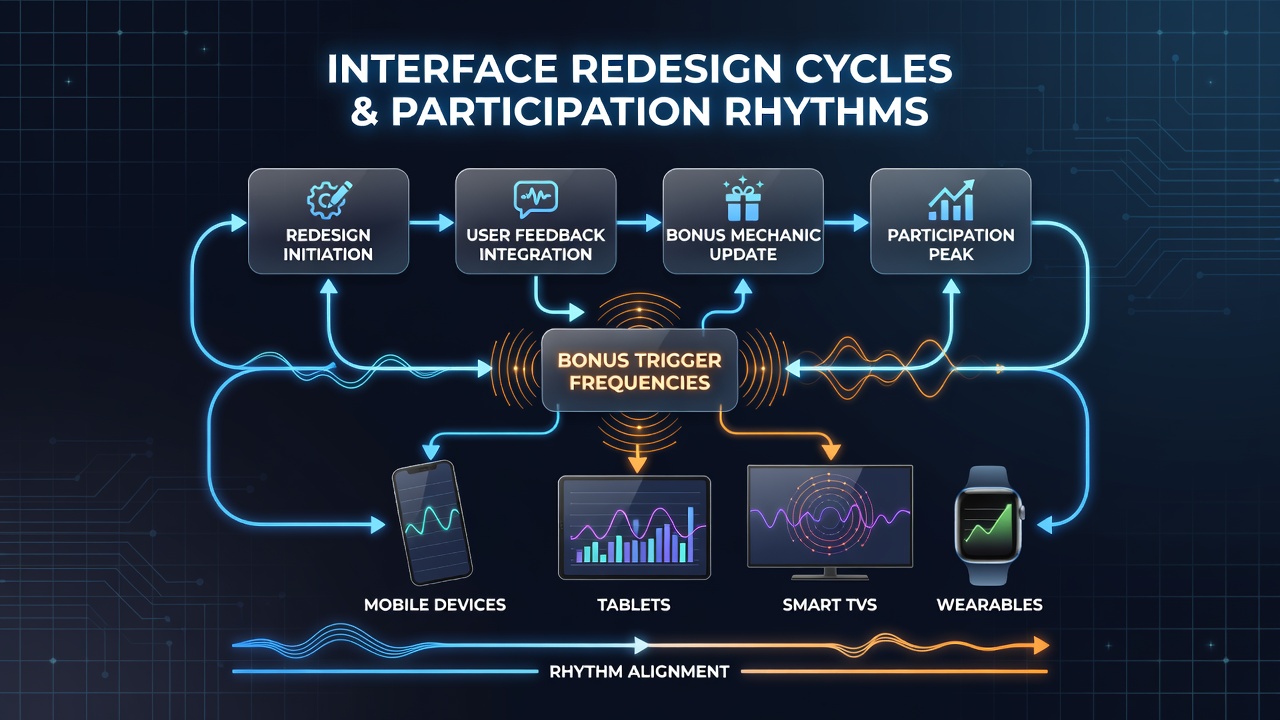
Multi-device entertainment platforms adjust their visual layouts and navigation structures on regular schedules that frequently match the release patterns of reward incentives, and observers note these coordinated changes influence how users move between sessions on phones, tablets, and computers. Data from platform analytics providers indicates redesign intervals often span three to six months while bonus activation points occur at intervals ranging from daily login rewards to weekly milestone events, and the overlap creates measurable shifts in session duration and device switching behavior.
Interface redesign patterns across major platforms
Development teams implement layout modifications to accommodate new device form factors and accessibility standards, while analysts track these updates through public release notes and internal metrics shared at industry conferences. Research conducted by the University of Nevada, Las Vegas gaming laboratory shows that redesign cycles typically introduce simplified menu structures and enhanced touch targets that reduce friction during reward claims, and these modifications align with bonus frequency adjustments to maintain consistent user flow. In June 2026 several platforms rolled out unified dashboard elements that consolidated progress trackers for ongoing promotions, and the timing matched an increase in mid-week bonus activations reported across multiple operators.
Bonus activation timing and frequency data
Operators set bonus triggers according to player segmentation models that factor in historical engagement rates, and records from regulatory filings reveal daily free-spin allocations often increase during periods immediately following major interface updates. Figures released by iGaming Ontario demonstrate that when redesigns introduce new notification systems the frequency of time-limited offers rises by an average of 18 percent in the subsequent quarter, while cross-device synchronization protocols ensure the same incentives appear consistently whether users access accounts through mobile applications or browser-based portals.
Impact on participation rhythms
Users develop habitual return patterns that respond to both visual cues and reward availability, and studies from the Australian Institute of Family Studies highlight how synchronized changes can extend average session lengths across devices by encouraging seamless transitions from one screen to another. When interface elements highlight upcoming bonus windows through persistent progress bars or calendar integrations, participation data shows elevated check-in rates during evening hours on weekdays, and the same patterns appear in weekend morning activity spikes on tablets. Platform logs indicate that redesigns featuring consolidated reward centers reduce the steps required to claim incentives, which in turn compresses the gap between login and active play across all connected devices.
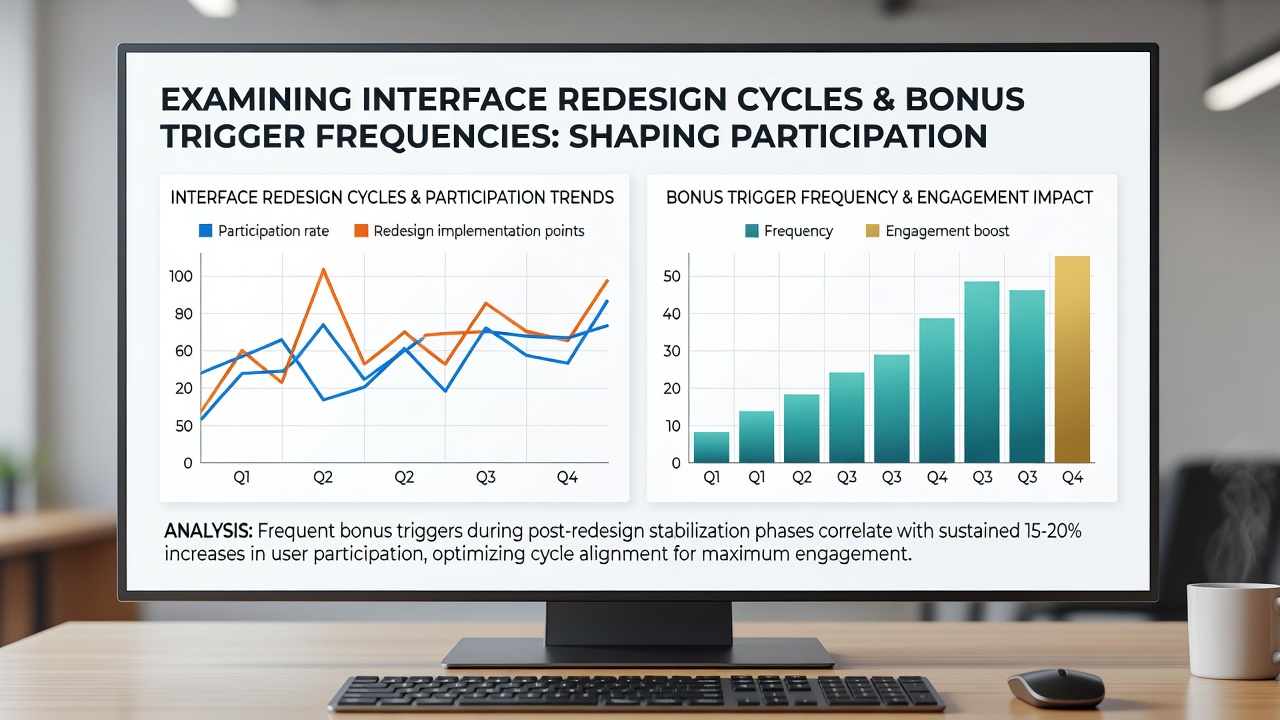
Observers tracking these metrics note that platforms employing staggered bonus frequencies maintain steadier engagement curves even after layout overhauls, whereas abrupt alignments between redesign launches and concentrated reward bursts produce sharper peaks followed by rapid declines. European Gaming and Betting Association reports from 2025 document similar rhythm adjustments when operators introduced device-adaptive themes that carried over visual continuity from desktop to mobile sessions, and those changes coincided with recalibrated bonus reset timers that prevented overlap fatigue.
Cross-device synchronization mechanics
Backend systems push interface updates and bonus parameters through unified content delivery networks so that changes appear simultaneously regardless of access point, and technical documentation from platform vendors confirms these deployments often occur during low-traffic windows to minimize disruption. When redesign cycles introduce gesture-based navigation alongside more frequent micro-bonuses, users exhibit increased device switching within single play periods according to telemetry collected by multiple operators. The alignment reduces context-switching costs because familiar visual anchors remain consistent while new incentive layers appear at predictable intervals.
Observed patterns in 2026 platform activity
Throughout the first half of 2026 several operators adjusted both redesign schedules and bonus calendars in response to updated device usage statistics that showed rising tablet engagement during afternoon hours, and the modifications produced measurable stabilization in daily active user counts. Regulatory submissions filed with Canadian provincial authorities detail how these coordinated adjustments support compliance reporting by creating clearer audit trails for reward distribution timing relative to interface modifications.
Conclusion
Interface redesign cycles and bonus trigger frequencies operate as interconnected levers that shape how participants allocate attention across devices, and available data continues to document the resulting rhythm adjustments without requiring subjective interpretation. Continued monitoring through academic and regulatory channels will provide further clarity on these dynamics as platforms evolve their multi-device strategies.