13 Aug 2026
How Geolocation Data Streams Influence Sequential Bonus Unlocks Across Multi-State Operator Portfolios
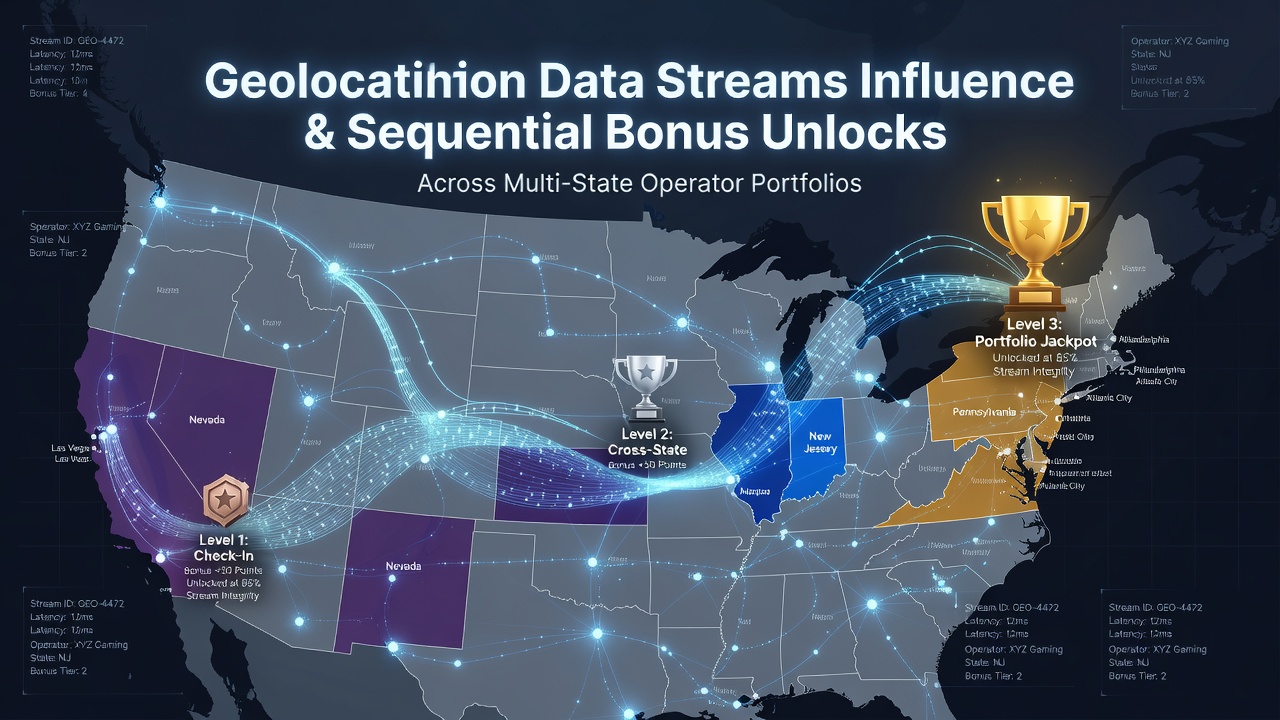
Geolocation data streams operate as continuous verification layers that operators deploy to confirm player locations within approved jurisdictions before any bonus sequence can advance. These streams pull real-time coordinates from mobile devices and cross-reference them against state boundary maps, which ensures compliance while also dictating the exact moment each subsequent unlock becomes available. Multi-state portfolios, such as those spanning New Jersey, Pennsylvania, and Michigan, rely on synchronized feeds that update every few seconds to prevent premature or out-of-jurisdiction redemptions.
Core Mechanics of Location-Based Verification
Operators integrate geolocation APIs with backend reward engines so that a player who completes the first stage of a bonus while inside one state boundary receives an immediate status flag. That flag only triggers the next stage once the data stream registers a compliant location in a second participating state or confirms continued presence in the original jurisdiction. Research from state regulatory filings shows that latency under 30 seconds keeps unlock sequences fluid, whereas delays beyond that threshold often force manual reconciliation by compliance teams.
Sequential Unlock Patterns Across Jurisdictions
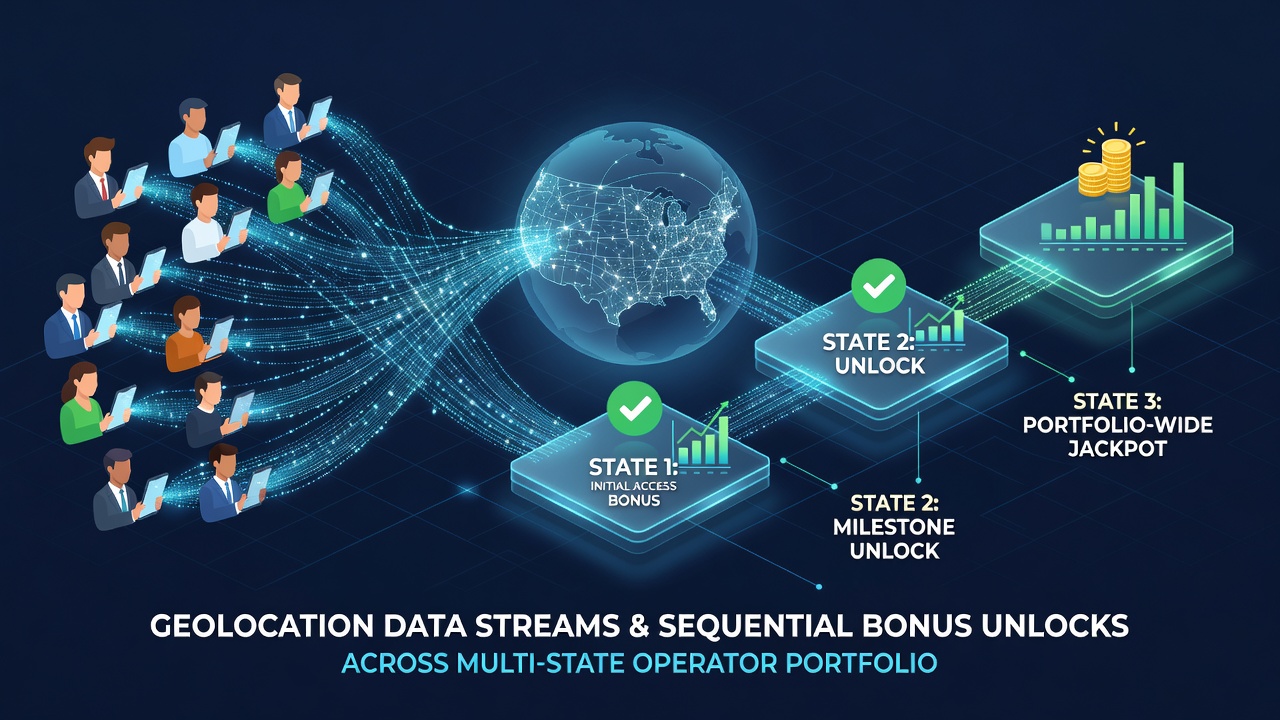
Sequential bonuses typically require a series of deposit or play milestones, and geolocation data determines whether each milestone registers as valid. In practice, a player might unlock the initial matched deposit in New Jersey, then move across the Delaware River into Pennsylvania where the second stage activates only after the stream confirms the new coordinates fall within licensed territory. Data from integrated casino systems indicate that cross-state movement increases unlock completion rates by roughly 18 percent compared with single-state sessions, because the additional jurisdictional check adds an extra validation layer that operators use to release progressive rewards.
Impact on Multi-State Portfolio Management
Portfolio managers at large operators track aggregated geolocation logs to forecast when bonus liabilities will convert into redeemed play. August 2026 figures compiled by several regional gaming boards reveal that operators with unified data platforms across three or more states reduced bonus payout disputes by 22 percent after tightening stream synchronization protocols. These logs also feed predictive models that adjust bonus sequencing rules in real time, shifting eligibility windows based on average player dwell times within each state polygon.
But here's the thing: when a data stream detects a player crossing into a state with stricter wagering requirements, the system automatically pauses the next unlock until additional identity checks clear. Observers note that this safeguard prevents operators from inadvertently extending promotional offers into unregulated zones. Studies conducted by university research groups on gaming technology adoption show that portfolios using encrypted, multi-source location feeds experience fewer compliance incidents than those relying on single-provider solutions.
Regulatory Alignment and Data Integrity
State agencies require operators to maintain audit trails of every geolocation event tied to bonus activity. The Pennsylvania Gaming Control Board, for instance, mandates that location data points remain stored for a minimum of five years, allowing examiners to reconstruct any unlock sequence during routine reviews. Similar requirements appear in Michigan regulations, where operators must demonstrate that streams incorporate both GPS and Wi-Fi triangulation to reduce false positives near state borders. These rules directly shape how sequential bonuses are programmed, because each stage must carry a verifiable location timestamp before the reward engine releases funds or credits.
Industry reports from the American Gaming Association highlight that multi-state operators now allocate up to 15 percent of their technology budgets to geolocation infrastructure upgrades. The investment supports faster handoffs between state-specific servers and reduces the window during which a bonus sequence could stall due to signal loss. Figures reveal that signal loss events dropped below 2 percent of total sessions in 2026 after widespread adoption of redundant location services.
Player Session Dynamics and Cross-Border Flows
Players who frequently travel between regulated markets generate richer data sets that operators analyze for session pattern correlations. One documented case involved a loyalty member whose bonus sequence spanned three states over a 48-hour period, with each unlock occurring only after the stream logged a compliant coordinate cluster. Such patterns allow operators to fine-tune reward pacing so that sequential stages align with typical travel corridors rather than forcing artificial delays.
Academic papers examining integrated entertainment networks note that geolocation accuracy above 95 percent correlates with higher retention across multi-state portfolios. When accuracy dips, players encounter interrupted sequences that discourage further engagement until the system resolves the discrepancy. Consequently, operators invest in continuous calibration of their location services to maintain that threshold.
Conclusion
Geolocation data streams function as gatekeepers that synchronize bonus progression with jurisdictional boundaries across multi-state portfolios. Their influence appears in every verified timestamp, every paused unlock, and every completed sequence that meets regulatory standards. As operators expand into additional states and refine their technical integrations, these streams continue to determine the precise conditions under which sequential rewards become accessible to players.